Lumbar Spondylosis Treatment in Kolkata
Physiotherapy and hands-on care for lower back pain and stiffness from age-related changes in the spine
Overview
Lumbar spondylosis means age-related wear in the discs and joints of the lower back. When it involves the lowest part of the spine, it is often called lumbosacral spondylosis. It is very common with age, and it often appears on X-rays or MRI scans of people with little or no pain. When it causes symptoms, these are usually lower back pain and stiffness, especially in the morning or after sitting, and sometimes pain or heaviness in the legs when walking or standing. The changes cannot be reversed, but most people improve with exercise, hands-on treatment and changes to daily activity, without surgery. Every first visit starts with an assessment by Dr. Partha Sarathi Neogi at our Kalighat clinic.
How Dr. Neogi assesses lumbar spondylosis
- Your history: when the pain started, what makes it better or worse, how far you can walk or stand, your work and daily activities, and any leg symptoms.
- A review of your X-ray or MRI reports if you have them, explained in plain language. Findings such as disc bulges and degenerative changes are common and do not always explain the pain.
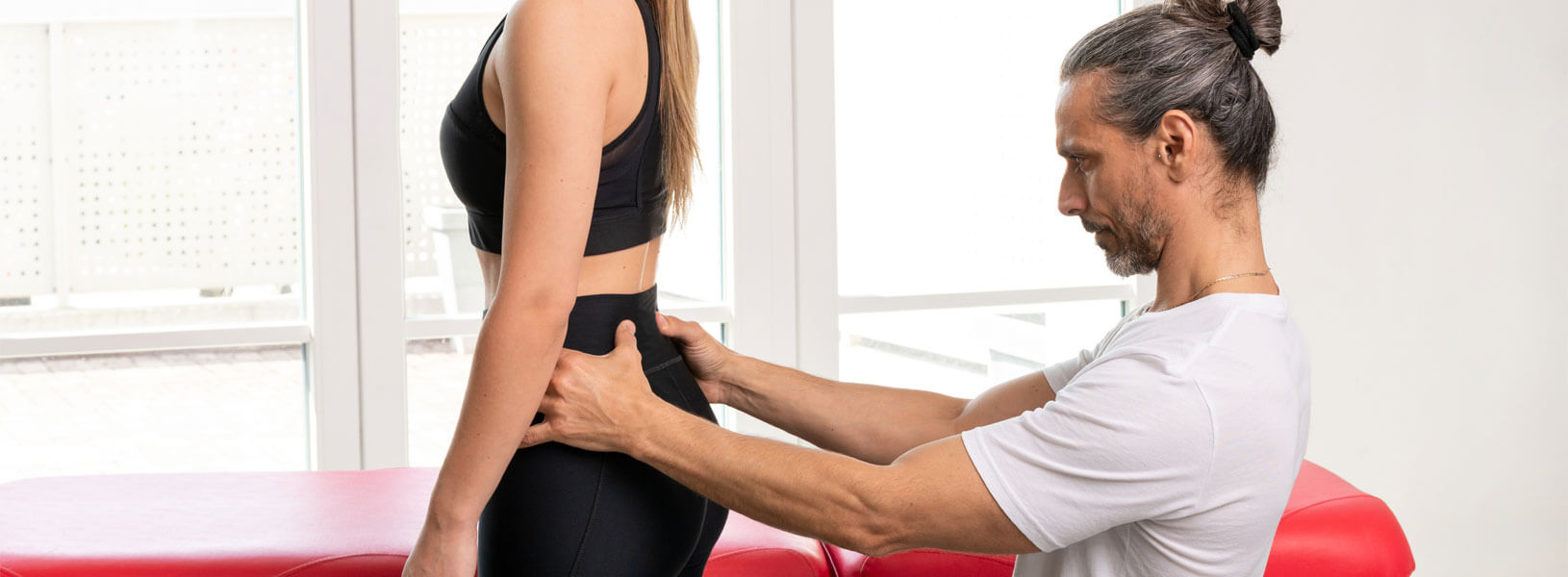
- Movement and strength of the back, hips and legs, and how you sit, bend and walk.
- A check of the nerves to your legs: strength, sensation and reflexes, to look for nerve root irritation or narrowing of the spinal canal.
- A plain-language explanation and a plan, including exercises to start at home.
What lumbar spondylosis is, and how many sessions you may need
With age, the discs between the lower back bones lose height and water, the facet joints wear, and bony edges can form. These changes, called lumbar spondylosis, can make the back stiff and sore, especially after long sitting, bending or lifting. In some people the space for the nerves narrows (lumbar spinal stenosis). This causes pain, heaviness or tingling in the legs that comes on with walking or standing and eases with sitting or bending forward. If a nerve root is irritated, pain can travel down one leg, like sciatica.
Care focuses on exercises for back and hip strength and movement, staying active with walking within comfort, and advice on sitting, lifting and daily activities. Joint mobilisation, soft-tissue work and, when it is suitable and you agree, a chiropractic adjustment can ease pain alongside exercise. Lumbar traction, therapeutic ultrasound or TENS/IFT may give short-term relief for some people, alongside exercise rather than instead of it. How many sessions you need depends on how long you have had symptoms and how you respond, and progress is reviewed at each visit. Our back pain, sciatica and slip disc pages cover related problems.
Who we often see
- Lower back pain and stiffness with lumbar or lumbosacral spondylosis on an X-ray or MRI report
- Back stiffness that is worst in the morning or after sitting
- Leg pain or heaviness when walking or standing that eases with sitting
- Back pain that spreads to the buttock or down one leg
- Lower back pain that keeps coming back in people over 40
- Back pain that makes long journeys, housework or standing at work difficult
Treatment options (planned after your assessment)
- Back, core and hip exercises for strength and movement, progressed step by step
- A walking plan to build how far you can walk comfortably
- Joint mobilisation and soft-tissue work for the lower back and hips
- Chiropractic adjustment only when it is suitable for you and you agree to it
- Lumbar traction, therapeutic ultrasound or TENS/IFT for short-term relief in some cases, alongside exercise
- Advice on sitting, lifting, sleeping positions and staying active at work and home
What you can do at home
- Stay as active as you comfortably can; long bed rest usually makes stiffness worse.
- Break up long periods of sitting with short walks or a change of position.
- If walking brings on leg pain, try shorter walks with rests, or lean forward on a support for a moment.
- A warm pack for 10 to 15 minutes can ease morning stiffness.
- Do your exercises regularly; mild discomfort that settles within a day is acceptable.
- For pain medicine, follow your doctor's or pharmacist's advice.
Related conditions
Care at our Kalighat clinic
At our Kalighat clinic, lumbar spondylosis care starts with an assessment by Dr. Partha Sarathi Neogi, senior physiotherapist & chiropractic expert with 20+ years of clinical experience. He explains what he finds, whether hands-on care is likely to suit you, and when a doctor's opinion or a scan is needed first. The clinic is near Kalighat Metro and 27 Pally Park, Sahanagar. About the Kalighat clinic
Frequently Asked Questions
It is age-related wear in the discs and joints of the lower back. It is very common with age and does not always cause pain. When it does, the usual symptoms are lower back pain and stiffness, sometimes with leg pain.
It means the same age-related changes at the lowest part of the spine, where the lumbar spine meets the sacrum. It is treated in the same way, based on your symptoms and assessment.
The changes in the spine cannot be reversed, but pain, stiffness and walking distance often improve a lot with exercise, hands-on treatment and changes to daily activity. Most people do not need surgery.
For most people, yes. Regular walking within comfort keeps the back moving and builds strength. If walking brings on leg pain, the plan builds distance gradually.
Common ones include gentle back mobility exercises, core and hip strengthening, and walking. Which ones suit you depends on your assessment, so they are shown and checked at the clinic first.
Surgery is considered for a small number of people, for example with severe or worsening nerve symptoms, or pain that stays severe despite good care. A spine surgeon makes that decision.
It depends on your condition. After the assessment you will be told what to expect, and your progress is reviewed at each visit.
Lumbar Spondylosis Treatment in Kolkata — Chiropractic Solution Kalighat
Looking for lumbar spondylosis treatment? At Chiropractic Solution in Kalighat, South Kolkata, every first visit starts with an assessment so you know what is likely causing your symptoms and whether our care suits you.
When to see a doctor or go to emergency first
Please seek urgent medical care instead of booking with us if you have:
- Numbness around the genitals or buttocks, or new problems passing urine or controlling your bladder or bowels: go to a hospital emergency at once
- Weakness in a leg or foot that is getting worse, or a foot that drops or drags
- Back pain with fever, unexplained weight loss or a history of cancer
- Back pain after a fall or accident, especially in older people or people with osteoporosis
- Severe pain at night or at rest that does not ease in any position
- Pain, numbness or weakness in both legs that is getting worse
Do not stop any medicine your doctor has prescribed without speaking to them.
Our clinic serves patients from Kalighat, Hazra, Rashbehari, Gariahat, Ballygunge, Bhowanipore. Call or WhatsApp to book an assessment for lumbar spondylosis treatment at our Kalighat clinic (Mon–Sat, 9 am – 8 pm).
Ready to Start Your Recovery?
Book your appointment for Lumbar Spondylosis Treatment today at Chiropractic Solution, Kalighat, Kolkata.
Get In Touch With Us
Phone Number
+91 85830 66950Email Address
Parthas.neogi@gmail.comWorking Hours
Mon–Sat 9am – 8pm (Sunday closed)
Enquiry Here Below!
Other Physiotherapy Treatments
- Manual Therapy & Physiotherapy
- Electrotherapy Treatment (IFT, TENS, Ultrasound)
- Exercise Therapy & Rehabilitation
- Post-Surgery Rehabilitation
- Neuro Physiotherapy & Stroke Rehabilitation
- Frozen Shoulder Treatment
- Knee Pain & ACL Rehabilitation
- Dry Needling Therapy
- Heel Pain & Plantar Fasciitis Treatment
- Tennis Elbow & Golfer's Elbow Treatment
- Shoulder Pain & Rotator Cuff Treatment
- TMJ & Jaw Pain Treatment
- Vertigo Treatment (BPPV & Vestibular Rehab)
- Hip Pain Treatment
- Cervical Spondylosis Treatment